How oil-filled radiators work
An electric element heats oil sealed inside metal fins. The oil warms up slowly and then gives out steady, silent heat, and stays warm for a while after it's switched off.
Side by side
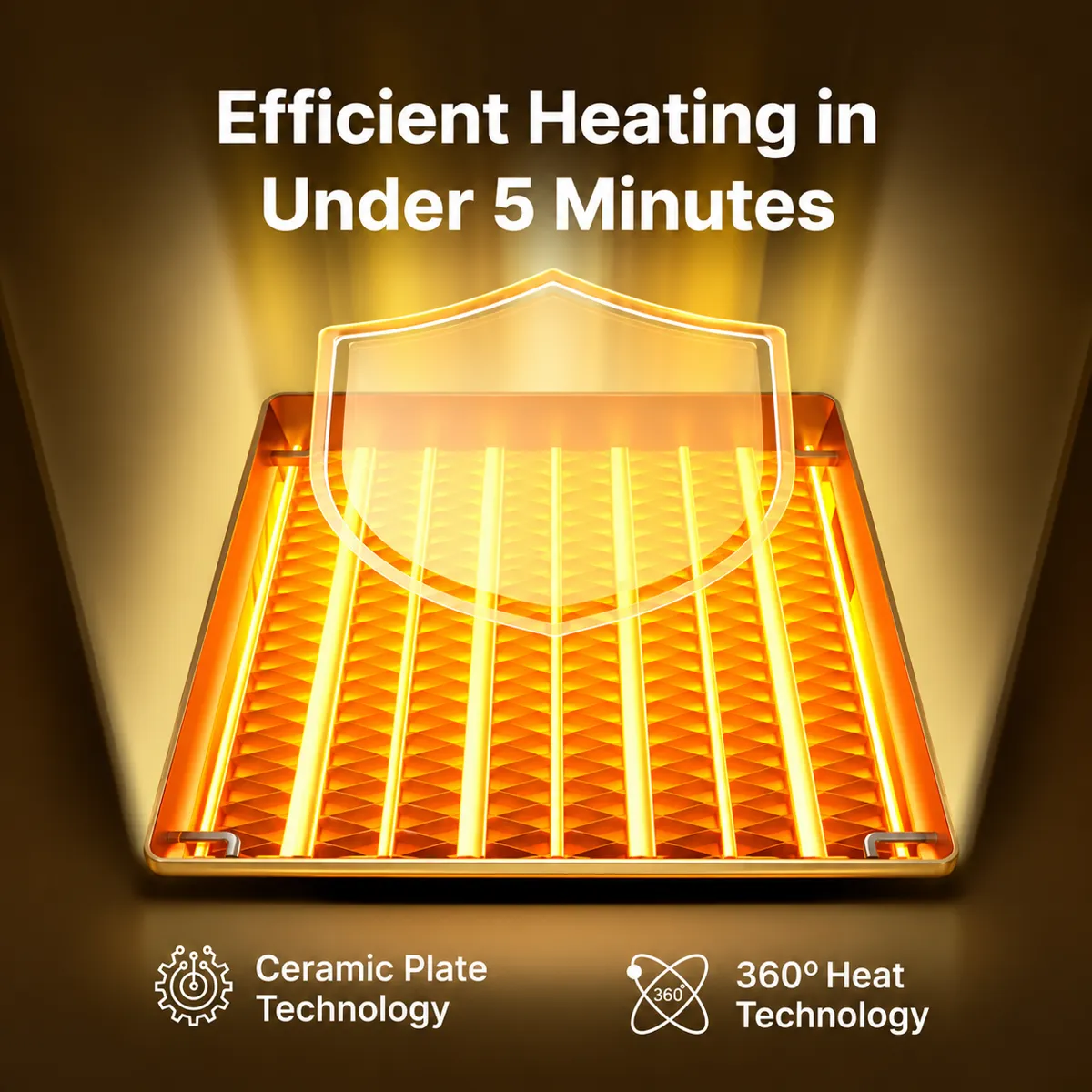
- Warm-up: ceramic in minutes; oil-filled often 20+ minutes
- Noise: oil-filled is silent; ceramic a soft hum (~45 dB for RapidHeat)
- Weight and size: ceramic is compact; oil-filled is heavy and floor-standing
- Surface: oil-filled fins get hot to touch
- Floor space: plug-in ceramic needs none
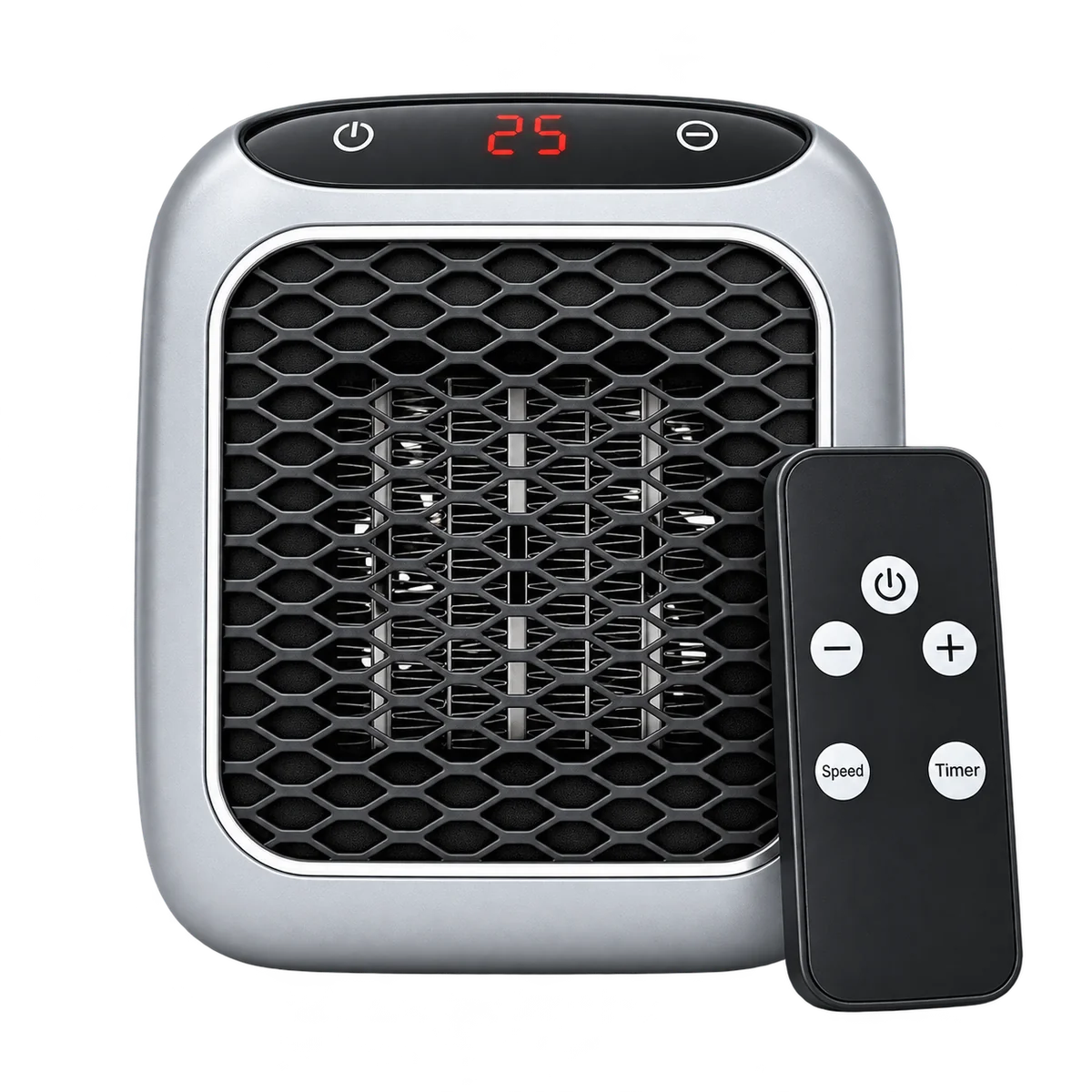
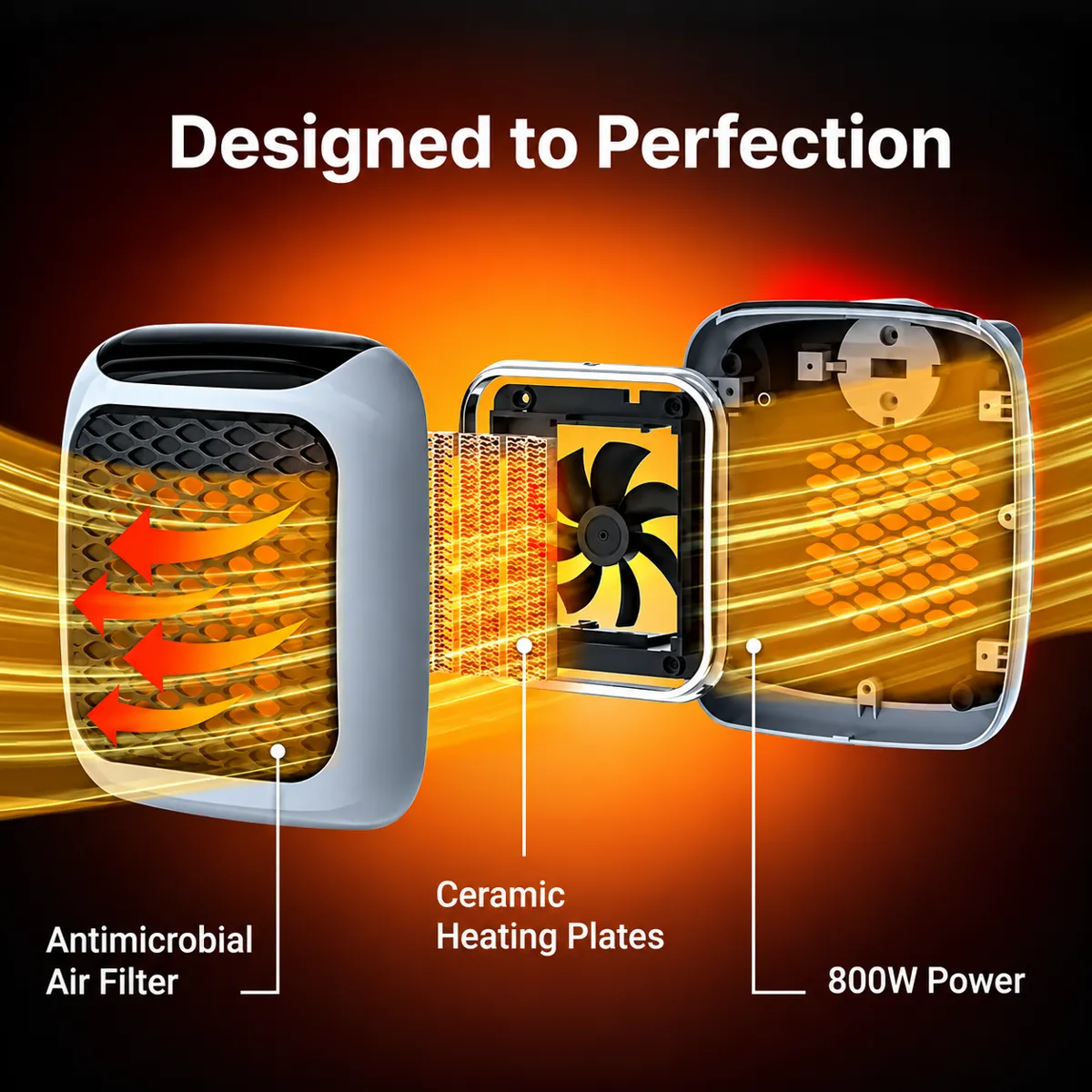
RapidHeat: 400W/800W ceramic heater
Thermostat, remote and timer · 30-day money-back guarantee
Which costs less to run?
Per hour, cost depends on wattage. Many oil-filled radiators are 1,500–2,000W, while RapidHeat is 400W/800W. A lower-wattage heater that warms quickly can use less in total for short sessions, while oil-filled suits long, steady use.
Our honest take
If you want a room warm quickly in the evening, or you move between rooms, ceramic is the better fit. If you need silent heat for many hours in a larger room and don't mind the bulk, an oil-filled radiator is a good option.
Why RapidHeat fits
- Plugs straight into a wall outlet, so there's nothing to install
- Ceramic heating with 400W and 800W modes
- Digital thermostat, remote control and timer
- Quiet at around 45 dB
- Overheat protection and automatic shut-off
- Suits rooms up to about 250 sq ft (≈23 m²)
How many heaters for your room?
A rough guide for topping up a home that has some heating. Cold, high-ceilinged or poorly insulated rooms may need more.
| Room size | Typical room | RapidHeat units |
|---|---|---|
| Up to 250 sq ft (≈23 m²) | Bedroom, office, small living room | 1 |
| Up to 500 sq ft (≈46 m²) | Living room, large bedroom | 2 |
| Up to 750 sq ft (≈70 m²) | Open-plan or draughty room | 3 |
| Larger spaces | Alongside your main heating | 4 |
What it costs to run
Maximum cost at full power, for common electricity prices per kWh in your own currency. With the thermostat cycling off once the room is warm, real costs are often lower. Try the energy cost calculator with your exact price.
| Price per kWh | Low 400W / hour | High 800W / hour | High, 4 h a day / month |
|---|---|---|---|
| 0.15 | 0.06 | 0.12 | 14.40 |
| 0.25 | 0.10 | 0.20 | 24.00 |
| 0.35 | 0.14 | 0.28 | 33.60 |
Who RapidHeat is not for
We'd rather you buy the right heater than return the wrong one. RapidHeat isn't the best choice for:
- Heating a whole house or open-plan floor on its own
- Large rooms over about 250 sq ft (≈23 m²) with just one unit (use two or more)
- Bathrooms or anywhere it could get splashed with water
- People who want silent, fan-free heat (try an oil-filled radiator)
Common questions
Is a ceramic heater better than an oil heater?
For speed, size and short sessions, yes. For silent, long-running background heat, oil-filled has the edge.
How much does RapidHeat cost to run?
At full power RapidHeat uses 0.4 kWh per hour on Low (400W) or 0.8 kWh per hour on High (800W). Multiply that by your electricity price per kWh. At 0.25 per kWh that's 0.10 per hour on Low and 0.20 per hour on High. The thermostat cycles it off once the room is warm, so real use is often lower.
Is it noisy?
RapidHeat runs at around 45 dB, which is roughly as loud as a quiet library or a soft hum. Most people can sleep or take calls next to it.
Is RapidHeat safe?
It has overheat protection, automatic shut-off and a thermostat. As with any heater, plug it directly into a wall outlet, keep about 1 m (3 ft) clear around it, never cover it and keep it away from water.
What if it doesn't work for me?
Every order from the official store comes with a 30-day money-back guarantee. Contact support and we'll walk you through the return.