The safer approach
- Warm the room before bed, then let the timer switch the heater off
- Choose a heater with overheat protection and auto shut-off
- Keep it clear of bedding, curtains and clothes
- Never cover a heater
How RapidHeat helps
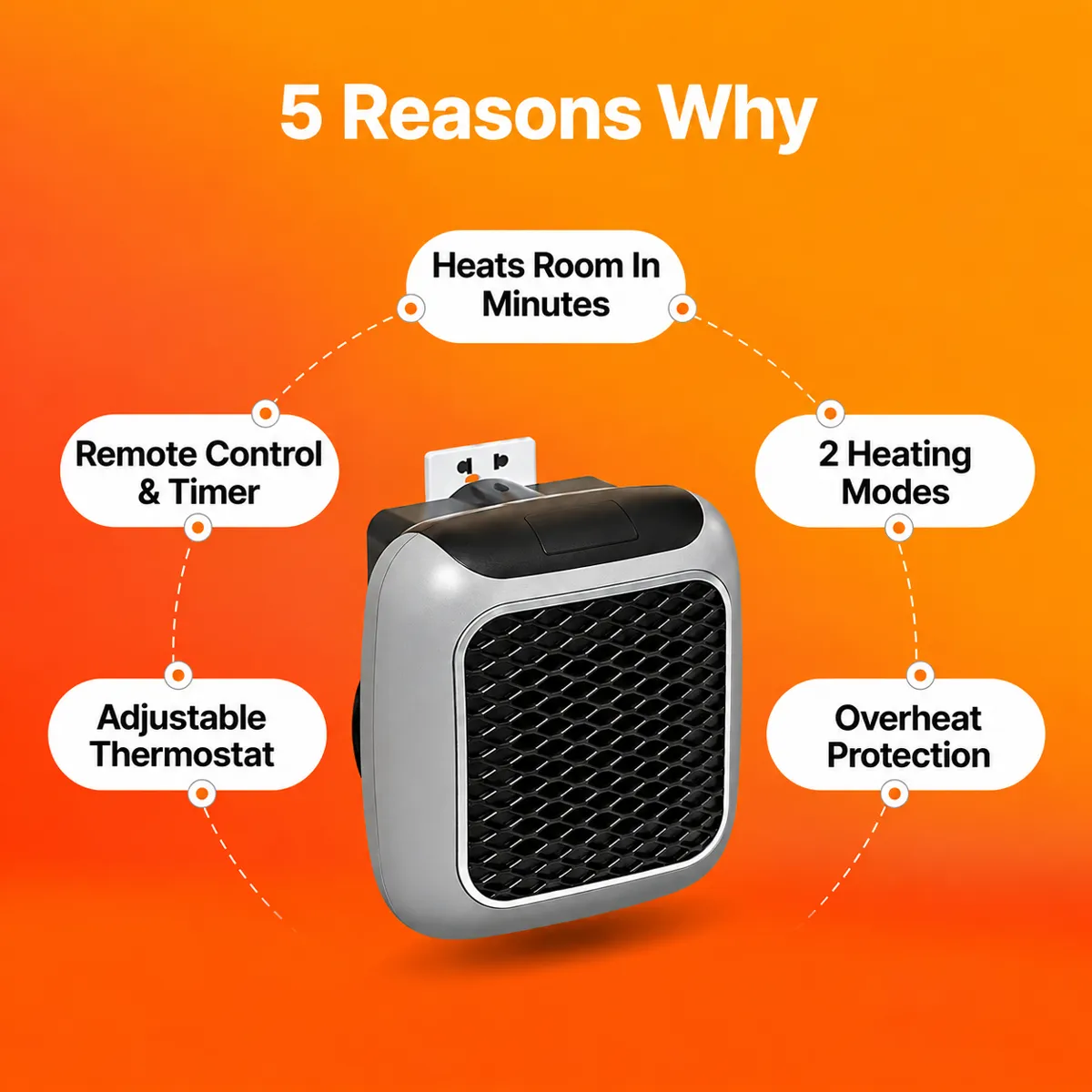
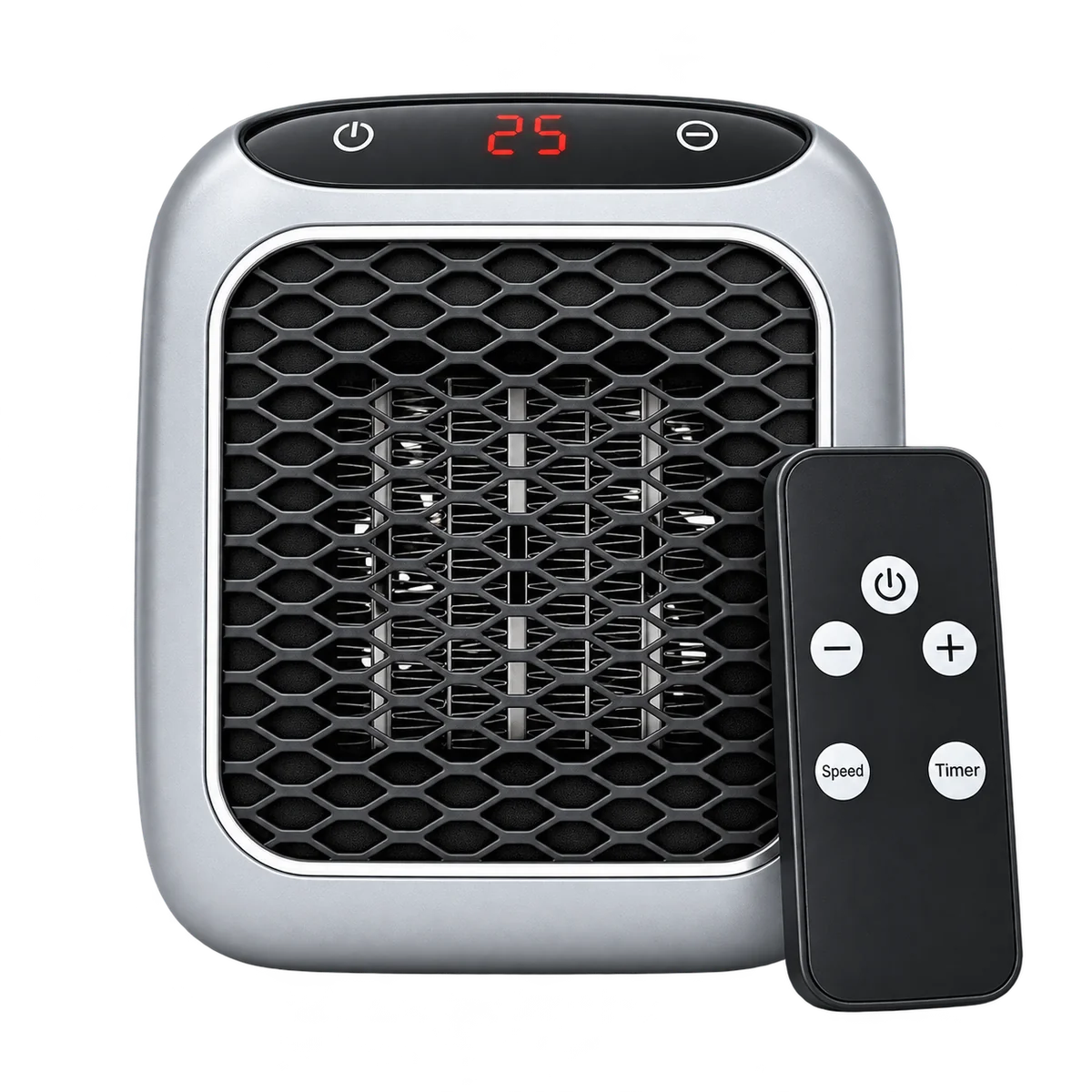
RapidHeat has a built-in timer, a thermostat, overheat protection and automatic shut-off, so you can warm your bedroom and let it turn itself off.
RapidHeat: 400W/800W ceramic heater
Thermostat, remote and timer · 30-day money-back guarantee
Why safety experts advise against it
Fire safety organisations generally recommend switching heaters off before you go to sleep or leave a room. The risk isn't that a heater will fail on its own; it's things like bedding slipping against it, clothes left nearby or a damaged outlet that nobody notices while you're asleep.
How to stay warm all night without the heater on
- Warm the bedroom for 30 minutes before bed
- Use the timer so the heater switches off after you fall asleep
- Close curtains and doors to hold the warmth in
- Add a warmer duvet or a blanket layer
- Wear socks and layers rather than heating the room all night
Safety features worth insisting on
If you use any heater in a bedroom, choose one with overheat protection (it switches off if it gets too hot), automatic shut-off, a thermostat and a timer. RapidHeat has all four. Even so, the timer is the most important habit.
Special cases: babies, children and older people
Never leave a heater running unattended in a baby's or young child's room. For older people living alone, a heater with a timer and auto shut-off is important, and smoke alarms should be tested regularly.
How many heaters for your room?
A rough guide for topping up a home that has some heating. Cold, high-ceilinged or poorly insulated rooms may need more.
| Room size | Typical room | RapidHeat units |
|---|---|---|
| Up to 250 sq ft (≈23 m²) | Bedroom, office, small living room | 1 |
| Up to 500 sq ft (≈46 m²) | Living room, large bedroom | 2 |
| Up to 750 sq ft (≈70 m²) | Open-plan or draughty room | 3 |
| Larger spaces | Alongside your main heating | 4 |
What it costs to run
Maximum cost at full power, for common electricity prices per kWh in your own currency. With the thermostat cycling off once the room is warm, real costs are often lower. Try the energy cost calculator with your exact price.
| Price per kWh | Low 400W / hour | High 800W / hour | High, 4 h a day / month |
|---|---|---|---|
| 0.15 | 0.06 | 0.12 | 14.40 |
| 0.25 | 0.10 | 0.20 | 24.00 |
| 0.35 | 0.14 | 0.28 | 33.60 |
Who RapidHeat is not for
We'd rather you buy the right heater than return the wrong one. RapidHeat isn't the best choice for:
- Heating a whole house or open-plan floor on its own
- Large rooms over about 250 sq ft (≈23 m²) with just one unit (use two or more)
- Bathrooms or anywhere it could get splashed with water
- People who want silent, fan-free heat (try an oil-filled radiator)
Common questions
Is it safe to sleep with a space heater on?
It's safer to warm the room first and use a timer to switch the heater off, rather than running it all night.
Is RapidHeat safe?
It has overheat protection, automatic shut-off and a thermostat. As with any heater, plug it directly into a wall outlet, keep about 1 m (3 ft) clear around it, never cover it and keep it away from water.
Is it noisy?
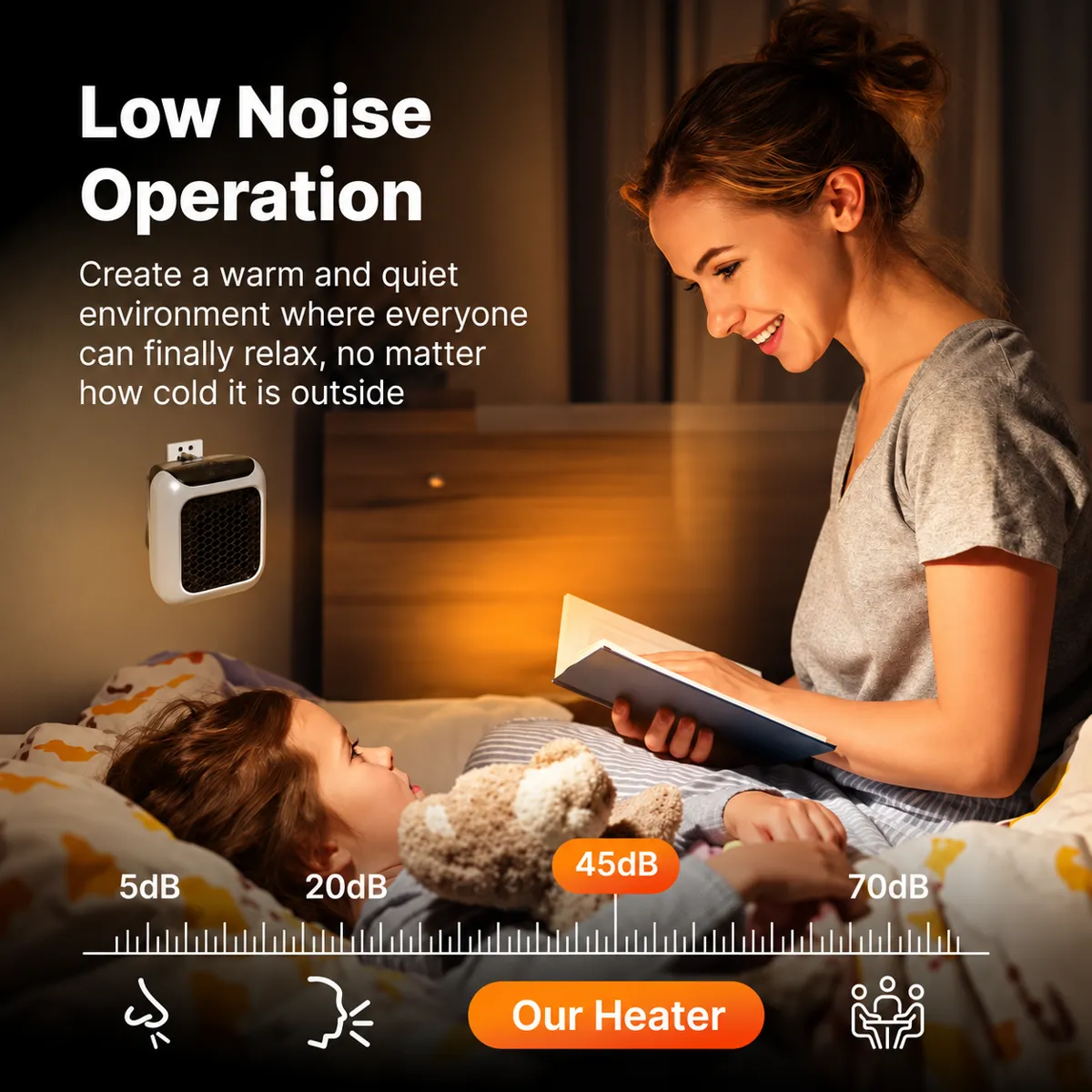
RapidHeat runs at around 45 dB, which is roughly as loud as a quiet library or a soft hum. Most people can sleep or take calls next to it.
How long should I set the timer for?
Most people set it for one to two hours, which covers falling asleep.
How much does RapidHeat cost to run?
At full power RapidHeat uses 0.4 kWh per hour on Low (400W) or 0.8 kWh per hour on High (800W). Multiply that by your electricity price per kWh. At 0.25 per kWh that's 0.10 per hour on Low and 0.20 per hour on High. The thermostat cycles it off once the room is warm, so real use is often lower.